

Most people think hearing loss happens slowly, somewhere far down the line, maybe as a part of aging. What often comes as a surprise is how strongly everyday work environments contribute to permanent hearing damage.
According to the World Health Organization, hundreds of millions of adults worldwide live with hearing loss that could have been prevented. A large portion of those cases are linked directly to long-term noise exposure at work. The danger is not always obvious.
Noise can feel normal, even harmless, until one day conversations become harder to follow or a persistent ringing never fully goes away. Understanding how workplace noise affects hearing is the first step toward protecting it for the long run.
Understanding workplace noise and why it matters
Workplace noise refers to any unwanted or harmful sound present during job activities. This can range from heavy machinery on construction sites to constant background noise in manufacturing plants, warehouses, or even busy commercial kitchens. What makes noise at work particularly risky is duration. Even moderate noise levels, when experienced for hours every day, can gradually damage the delicate structures inside the inner ear.
Many workers adapt to loud environments by simply raising their voices or tuning the sound out. Unfortunately, the ear does not adapt in the same way. Repeated exposure slowly reduces the ear’s ability to recover, leading to permanent changes in hearing sensitivity. Over time, this can affect communication, concentration, sleep quality, and overall wellbeing. Noise is not just an annoyance, it is a real occupational health hazard that deserves serious attention.
How noise damages hearing over time
Inside the inner ear are tiny hair cells responsible for converting sound vibrations into signals the brain can understand. These cells are extremely sensitive. Loud or continuous noise causes them to bend excessively, and once damaged, they do not regenerate. The result is noise induced hearing loss, which often develops gradually and without pain.
What makes this type of hearing loss especially dangerous is how easy it is to miss early signs. People may notice difficulty understanding speech in crowded spaces or a mild ringing after work that fades overnight. Over months or years, these symptoms can become permanent.
Common early warning signs include:
- Ringing or buzzing in the ears after shifts
- Needing to increase volume on phones or televisions
- Trouble understanding speech, especially higher pitched voices
- Feeling mentally drained after working in noisy environments
Ignoring these signs allows damage to continue silently, often until hearing loss is no longer reversible.
Safe noise levels and when risk begins
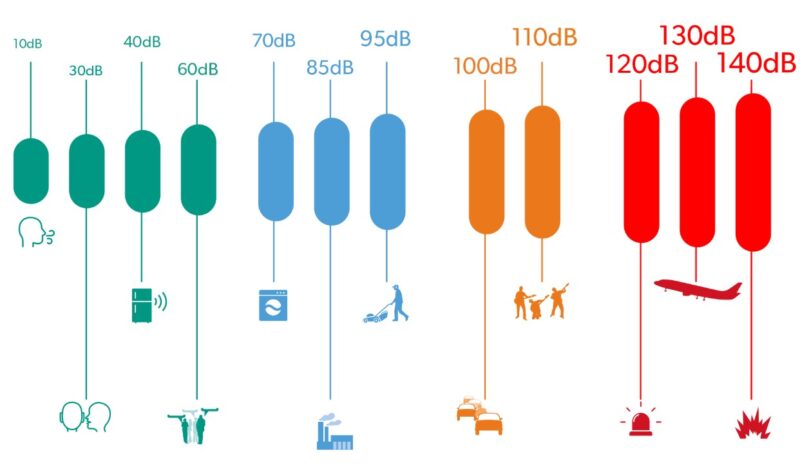
Not all noise is equally harmful. Risk depends on both volume and exposure time. Occupational health standards typically measure sound in decibels. As volume increases, the amount of safe exposure time decreases dramatically.
| Noise level (dB) | Common example | Maximum recommended exposure |
| 85 dB | Busy traffic or factory floor | 8 hours |
| 95 dB | Power tools or heavy machinery | 1 hour |
| 105 dB | Chainsaws or loud industrial equipment | 5 minutes |
Even brief exposure to very loud noise can cause damage, while longer exposure to moderately loud environments creates cumulative harm. Understanding these limits helps workers and employers recognize when protection is necessary.
Did you know? Hearing damage can begin at levels lower than many people expect, especially if exposure is repeated daily without adequate breaks.
The role of medical oversight and occupational health

Managing noise related health risks is not only about equipment and rules. Medical oversight plays a critical role in prevention and early detection. An occupational physician is trained to evaluate how workplace conditions affect long term health, including hearing risks. They assess noise exposure levels, review job tasks, and recommend protective strategies tailored to specific work environments.
Regular hearing assessments help track subtle changes before major damage occurs. When hearing shifts are detected early, adjustments can be made to reduce further exposure. Occupational health professionals also advise employers on compliance, education, and safer work practices. Their role bridges the gap between workplace realities and long term employee health, ensuring that prevention is proactive rather than reactive.
Hearing protection options and how to use them properly
Hearing protection devices are highly effective when used correctly. The challenge is consistency and proper fit. Many workers wear protection only when noise feels extreme, but damage often occurs during routine exposure.
Common hearing protection options include:
- Foam earplugs are affordable and effective when inserted properly
- Reusable earplugs, offering consistent fit and durability
- Earmuffs are ideal for intermittent noise and easy removal
- Custom molded plugs, designed for comfort during long shifts
Protection works best when combined with education. Incorrect insertion, poor maintenance, or removing protection too often can significantly reduce effectiveness. Comfort matters as well. Workers are more likely to use devices that fit well and do not interfere with communication or movement.
Employer responsibility and workplace noise control
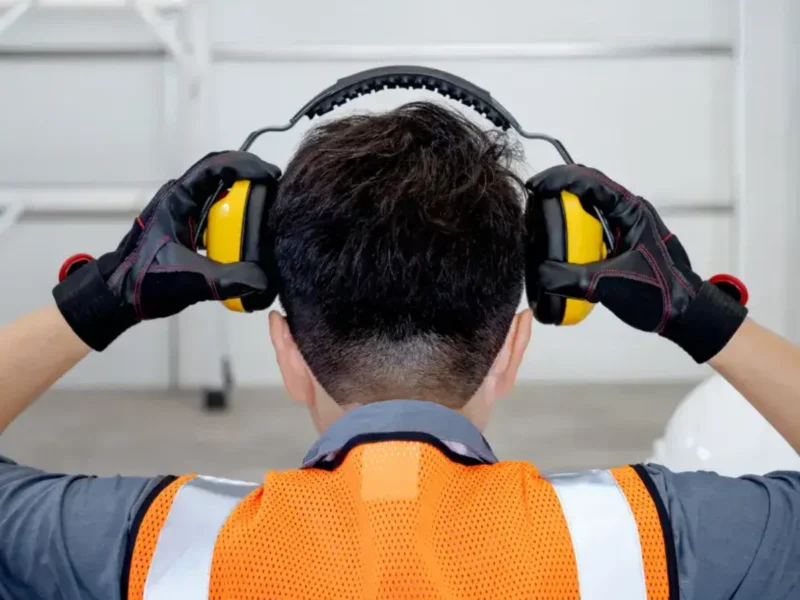
While personal protection is important, employers carry the responsibility for controlling noise at its source whenever possible. Engineering solutions are often more effective than relying solely on protective gear. This may include maintaining equipment, installing sound-dampening materials, or redesigning workflows to limit exposure.
Administrative controls also play a role, such as rotating tasks to reduce individual exposure time and scheduling noisy operations strategically. Clear policies and regular training help create a culture where hearing protection is normal rather than optional.
Important note: Relying only on personal protective equipment without addressing excessive noise levels can leave workers vulnerable if protection fails or is used incorrectly.
Long-term consequences beyond hearing loss
The effects of workplace noise extend beyond the ears. Chronic noise exposure has been linked to increased stress levels, fatigue, cardiovascular strain, and reduced job performance. Constant noise keeps the nervous system in a heightened state of alert, which can contribute to high blood pressure and sleep disturbances.
Hearing loss itself can lead to social isolation, frustration, and reduced quality of life. Communication difficulties often spill into personal relationships and mental health. For many workers, these effects appear long after leaving noisy jobs, making early prevention especially important.
Protecting hearing is not just about preserving sound perception. It supports overall health, emotional well-being, and long-term independence.
Final thoughts
Noise at work remains one of the most underestimated occupational health risks. Because hearing loss develops quietly, it is often ignored until it interferes with daily life. The good news is that most noise-related hearing damage is preventable with awareness, proper protection, and medical oversight.
Paying attention to early signs, respecting exposure limits, and using hearing protection consistently can make a lasting difference. Employers and workers share responsibility in creating safer environments where health is protected today and preserved for the future. Once hearing is lost, it cannot be restored. Protecting it now is one of the simplest and most valuable steps toward long-term well-being.